2026年3月23日星期一

Enhance Safety & Efficiency with Wireless Backup Camera | STONKAM


What is a Wireless Camera System?

A wireless camera system is a video surveillance solution based on wireless transmission technology, specifically designed for various types of vehicles. The core of this system consists of wireless surveillance cameras and wireless displays, primarily used in forklifts, construction machinery, and agricultural machinery operations.

Why wireless camera system?

The limitations of traditional wired monitoring systems—complex installation, vulnerability to damage, and high maintenance—are increasingly apparent in demanding vehicle environments. This has positioned reliable backup camera wireless technology as the superior solution for modern fleets.

Advancements in wireless transmission and HD video processing allow wireless truck camera systems to overcome physical cable restraints. Cameras can be flexibly mounted on vehicle rears, high points, or moving parts. The integration of a rear view camera wireless system provides crucial visibility without the hassle of rewiring, offering unparalleled deployment flexibility and reliability for equipment like forklifts and construction machinery.

Building on this foundation, wireless camera systems integrated with AI intelligent algorithms go a step further. They not only enable real-time identification of operational risks but also provide intelligent warnings and operational assistance. This empowers various vehicles, including forklifts, construction machinery, and agricultural machinery, to achieve more efficient and safer intelligent upgrades in complex scenarios.

How can wireless camera systems be applied to forklifts, construction machinery, and agricultural machinery?

1. Forklift Camera System: The Intelligent Eye for Warehousing

Address blind spots and safety hazards in narrow aisles with STONKAM's forklift camera solution. It features HD waterproof monitors and wireless truck cameras, with an optional laser positioning camera for precise load handling. Our AI-enhanced version offers pallet alignment reminders and pedestrian detection for proactive safety. 

wireless forklit camera system

2. Construction Equipment Monitoring: Precision for Heavy Machinery

Meet high-precision demands and overcome large blind spots with robust construction equipment monitoring. In a crane application, a backup camera wireless unit on the hook provides a real-time HD view to the cabin, with AI to detect workers and prevent collisions. Similarly, wireless truck cameras on excavators and mining trucks cover blind spots and support evidence recording.

Al wireless vehicle monitoring display
AI wireless vehicle monitoring display

3. Agricultural Machinery Monitoring: Clarity in Complex Environments

Mitigate risks from blind spots and harsh conditions. STONKAM's agricultural wireless monitoring system allows real-time observation of key parts like cutter heads from the cabin. A rear view camera wireless system also assists in safe reversing operations, preventing collisions.

Agricultural Machinery Monitoring

Agricultural Machinery Monitoring

Conclusion

Wireless vehicle monitoring is a proven upgrade path. STONKAM's HD Digital Wireless Monitoring System, integrated with AI algorithms, reduces hazards and boosts efficiency. Deployed globally, it offers flexible, tailored solutions for intelligent operational upgrades.

Frequently Asked Questions

Q1: Will wireless cameras work without Wi-Fi?

A1: Wireless cameras without internet retain all of their functionality because they don't depend on your Wi-Fi either.

Q2: What is the range of a wireless backup camera?

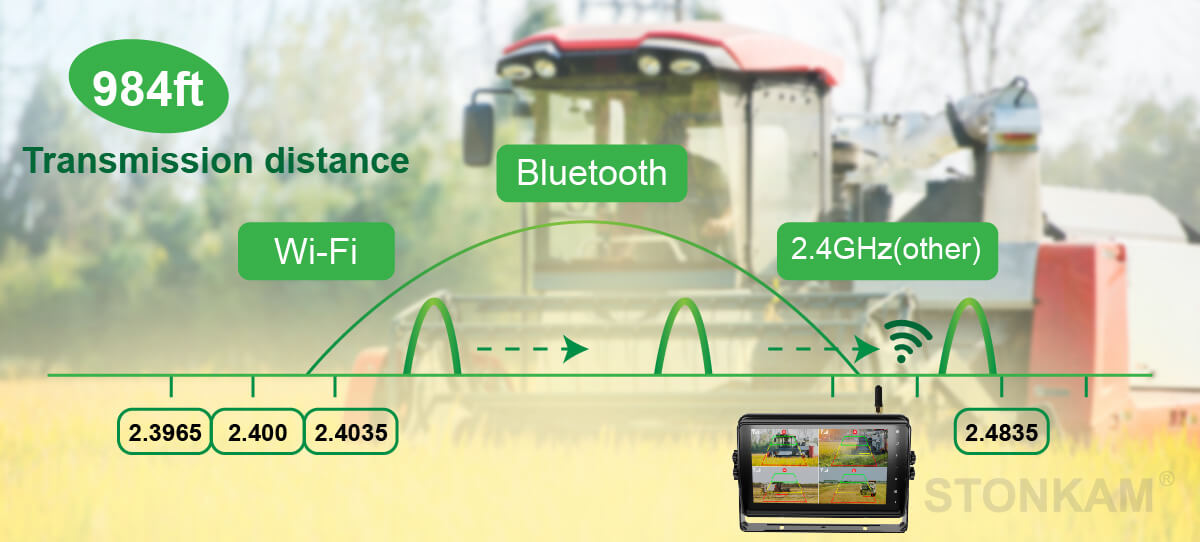
A2: With transmission distance in open area up to 300meters(984ft), even under high speed or long-distance operation, the monitor will show the surrounding environment in real time.

Q3: How do wireless cameras get power?

A3: Wireless backup cameras require a power source and can be used with the STONKAM magnetic charging battery for vehicles.

Link:Enhance Safety & Efficiency with Wireless Backup Camera | STONKAM_STONKAM CO., LTD

How Can an Intelligent AI MDVR System Transform Modern Vehicle Surveillance?


Mobile DVR (MDVR) technology has long been essential for recording vehicle video footage to support safety monitoring, accident evidence, and operational supervision. However, with the rapid development of commercial transportation, public transit, and logistics industries, traditional DVR functions are no longer sufficient. Modern fleets require intelligent, multi-functional, AI-powered MDVR systems capable of supporting advanced applications in real time.

To meet these evolving demands, the STONKAM® Intelligent AI MDVR System integrates cutting-edge algorithms and multiple surveillance modules, delivering more advanced, more proactive, and more industry-oriented vehicle monitoring capabilities.

This article explains how an intelligent MDVR system, also known as a mobile DVR system, mobile DVR camera system, or AI-powered MDVR, upgrades traditional video surveillance DVRs and provides powerful safety and operational benefits to fleets of all sizes.

Why Upgrade from Traditional DVR to an Intelligent AI MDVR System?

A traditional DVR focuses mainly on video recording.
An intelligent AI MDVR system integrates data, sensors, AI algorithms, and networking capabilities to support:

Real-time analysis
Driver behavior monitoring
Passenger flow statistics
Blind spot detectio
ADAS safety warnings
360° panoramic monitoring
Intelligent fleet management

These enhancements make the AI MDVR system suitable for industries such as:
Buses & public transit
Logistics and long-haul trucking
Tourist and charter buses
School buses
Fire trucks & emergency vehicles
Cash-in-transit and escort vehicles
Engineering and construction vehicles

Key Functional Modules of the Intelligent AI MDVR System

1. APC: Real-Time Passenger Flow Statistics

The intelligent AI MDVR system supports APC (Automatic Passenger Counter) to capture real-time passenger flow data.
Core capabilities include:
Intelligent vehicle scheduling
Passenger flow analysis
Ticketing early warning
Route planning optimization
Overloading alarm
Crowded door detection during boarding/alighting
This function is particularly valuable for bus operators who aim to improve operation efficiency and reduce safety risks.

2. ADAS + DMS: Comprehensive Driver Safety Management

The integrated ADAS (Advanced Driver Assistance System) and DMS (Driver Monitoring System) significantly enhance driving safety.
DMS detects:
Fatigue driving
Distraction
Smoking
Yawning
No driver detected
No seatbelt
Other unsafe driving behaviors

ADAS provides:
FCW (Forward Collision Warning)
LDW (Lane Departure Warning)
PD (Pedestrian Detection)
Front vehicle start reminder
Speed limit recognition (SSR)
Overspeed alarm
Together, ADAS + DMS help prevent accidents and support intelligent fleet monitoring.

3. BSD: Blind Spot Detection for Large Vehicles

The AI MDVR system supports BSD (Blind Spot Detection) with HD cameras to monitor the:
Front-side
Side
Rear
This helps reduce accidents caused by blind spots—especially important for trucks, buses, and engineering vehicles.

4. 360 AVM: Full Surround View Monitoring

The intelligent AI MDVR system integrates 360° AVM (Around View Monitoring) with ultra-wide-angle cameras.
Capabilities include:
360° dead-angle-free monitoring
Panoramic bird’s-eye view
All-around pedestrian detection
Radar or IPC integration
Expandable functions: ADAS, DMS, APC
This creates a truly proactive safety management platform for fleet operations.

Why Fleets Choose STONKAM AI MDVR System

Compared with traditional DVRs, the STONKAM intelligent AI MDVR system offers:
Multiple advanced AI algorithms
High reliability and stability
Multi-channel HD video support
Real-time alarms & event push
Cloud integration for fleet management
Flexible configuration for different industries
If you are looking for powerful, scalable MDVR solutions with deep AI intelligence, STONKAM delivers one of the most comprehensive platforms on the market.

Learn More About STONKAM Intelligent AI MDVR System

STONKAM provides complete AI-powered mobile DVR system solutions tailored for commercial vehicles.
Visit our official website for product details and professional technical support. 
View More >>

FAQ

Q1: What is an MDVR system?

An MDVR system (Mobile Digital Video Recorder) is an in-vehicle video recording solution that stores driving footage and supports real-time monitoring for fleet safety and incident analysis.

Q2: How is an intelligent AI MDVR system different from a traditional DVR?

An intelligent AI MDVR system integrates APC, ADAS, DMS, BSD, and 360 AVM algorithms, enabling proactive safety warnings and intelligent fleet management—far beyond simple video recording.

Q3: Which industries benefit most from AI MDVR systems?

Public transit, school buses, logistics fleets, fire trucks, emergency vehicles, and engineering equipment all benefit from enhanced safety, monitoring, and management features.

Q4: Can an AI MDVR system help reduce accidents?

Yes. With driver monitoring, blind spot detection, ADAS warnings, and 360° panoramic monitoring, the system helps drivers avoid collisions and improve overall operational safety.

Q5: Does STONKAM’s MDVR system support multi-channel HD cameras?

Yes. STONKAM supports multiple HD channels, real-time monitoring, cloud management, and integration with AI algorithms for fully intelligent vehicle surveillance.

Link:How Can an Intelligent AI MDVR System Transform Modern Vehicle Surveillance?_STONKAM CO., LTD

Are Traditional Rearview Mirrors Being Replaced? Bus & Truck Mirrorcam System Advantages & Trends


What is a CMS Mirrorcam System?

A CMS (Camera Monitoring System) electronic mirror system, often called a mirrorcam system​ or simply a mirrorcam, is an advanced solution that replaces traditional side mirrors with vehicle-mounted cameras and in-cabin displays. Using high-definition cameras on both sides of the vehicle and displays inside the cockpit, this modern mirrorcam system​ provides drivers with a wider, clearer, and more stable field of view.

Why Upgrade to a CMS Mirrorcam System?

As logistics, passenger transport, and special-purpose vehicles expand, the visibility, weather sensitivity, blind spots, and vibration issues of traditional mirrors increasingly compromise safety and efficiency.

Meanwhile, global regulatory updates are accelerating CMS adoption. China’s GB 15084-2022 introduces higher requirements for field of view, brightness adjustment, and image latency, while the EU’s UN ECE R46 formally permits and regulates camera-based mirror replacement. In parallel, ISO 26262 functional safety ensures system reliability across diverse operating scenarios.

By replacing optical mirrors with cameras and in-cabin displays, a mirrorcam​ delivers a wider field of view, clearer imaging, and intelligent assistance for safer, more reliable operation in all conditions.

Why Choose STONKAM AI CMS Mirrorcam System?

1. Excellent All-Weather Visibility

● Features WDR (Wide Dynamic Range) to resist backlight glare and enhance night vision imaging
● ISP high-brightness display ensures clarity even under strong sunlight
● Camera rated IP69K for water and dust resistance
● Automatic lens heating, defrosting, and self-cleaning

STONKAM mirrorcam system​ maintains consistently clear imaging performance in rain, nighttime, bright light, and tunnel transitions.

2. Blind Spot Expansion

STONKAM Smart Class II & IV CMS systems are certified under UN ECE R46 regulations. Smart Class V & VI CMS systems comply with the requirements for Class V & VI indirect vision devices.

● Class II & IV cameras: Monitor key rear and side areas, reducing collision and scraping risks during low-speed driving, turning, U-turns, and narrow road navigation.

● Class V & VI cameras: Monitor key front and side-front areas, ensuring visibility and safety during lane changes, turns, and starting.

3. AI Algorithm / Enclosure Customization Support

● AI pedestrian and vehicle detection
● Lane change assist alerts
● Supports alarm recording with G-sensor collision detection
● Customizable enclosure and appearance structure

STONKAM mirrorcam​ solution not only replaces mirrors but also integrates AI algorithms for proactive warnings to reduce accident rates.

4. Compliance with Regulations & Industry Standards

STONKAM CMS electronic mirrorcam systems​ meet mainstream domestic and international regulatory requirements:

● GB 15084-2022
● UN ECE R46
● ISO 26262
● UN ECE R151(MOIS)
● UN ECE R159(BSIS)

This helps fleets achieve safe and compliant operations in domestic and overseas markets

5. Adaptable for Both OEM & Aftermarket Installatio

Suitable for OEM integration and fleet aftermarket retrofitting, covering various vehicle types including logistics trucks and buses.

OEM Support: High-standard system built for mass production

● Advanced AI algorithm support: Enables rapid deployment of multiple AI functions, including image enhancement, driver behavior analysis, and object detection.
● Regulatory compliance: Fully compliant with major domestic and international regulations, ensuring legal and compliant delivery.
● High system compatibility: Seamlessly integrates with mainstream vehicle control systems for stable, coordinated operation.
● Integration & OEM customization: Supports deep integration with vehicle CAN, Ethernet, and onboard platforms, with flexible function and interface customization.
● Mass production & after-sales support: Backed by owned factories in China and Thailand and a mature supply chain, ensuring stable delivery and long-term technical support.

Aftermarket Friendly: Flexible solutions for fleet upgrades

● Flexible installation and layout: Supports various vehicle types (logistics trucks, buses, heavy-duty trucks) with custom brackets, wiring harnesses, and installation plans for mirrorcam​ retrofits.
● Supports small-batch needs: Quick production scheduling and delivery based on project scale, backed by owned factories and production systems.
● High customization: Customizable product appearance, structure, and AI algorithms per requirements.
● Durable design: Waterproof, shock-resistant, strong night vision and backlight performance, suitable for complex environments and high-frequency use.

6. Data Security

ACC input support with ACC delayed recording; supercapacitor power-loss protection prevents video data loss.

How to Get More Information?

Visit STONKAM’s official website for detailed information and professional technical support. Learn More >>

FAQ

Q1: How is a CMS mirrorcam system different from traditional mirrors?

Traditional mirrors are limited by their physical field of view and suffer from glare, vibration, and weather interference. A modern mirrorcam​ uses cameras and displays to provide wider, clearer, and more stable views.

Q2: Does this mirrorcam work reliably in rain or fog?

Yes. The IP69K-rated cameras in our mirrorcam system​ are equipped with heating, defogging, and WDR features to ensure clear imaging in harsh weather.

Q3: How does the CMS mirrorcam improve safety?

The mirrorcam system​ reduces blind spots and enhances visibility in all lighting and weather conditions, effectively lowering collision risks.

Q4: Does the mirrorcam system support both OEM integration and aftermarket use?

Yes. STONKAM's mirrorcam system​ is designed for dual-mode application, supporting large-scale fleet retrofitting as well as comprehensive OEM projects, including structural customization and full vehicle validation.

Q5: Are AI functions supported in this mirrorcam?

Yes. Our mirrorcam system​ platform supports the integration of various AI features such as DMS, ADAS, and BSD as needed.

Q6: Is the mirrorcam system compliant with relevant regulations?

Yes. STONKAM's mirrorcam system​ complies with major regulations including GB 15084-2022, ISO 26262, and UN ECE R46/R151/R159, ensuring safe and certified application.

Link:Are Traditional Rearview Mirrors Being Replaced? Bus & Truck Mirrorcam System Advantages & Trends_STONKAM CO., LTD

What Is MDVR system and Why Is It Essential for Fleet Safety?


In modern fleet management, safety, compliance, and risk control are no longer optional — they are operational priorities. For fleets operating in logistics, public transport, mining, or construction, MDVR is not just a recording device — it is a risk management and operational control system.

What Is MDVR?

MDVR (Mobile Digital Video Recorder) is an advanced onboard video and data recording system designed specifically for commercial vehicles. Unlike consumer dashcams, MDVR systems support multi-channel recording, GPS tracking, 4G/5G connectivity, and centralized fleet management platforms.MDVR systems are built for fleet-level visibility, centralized monitoring, and regulatory documentation.

It is widely used in logistics and delivery fleets, public transportation buses, school buses, mining trucks, construction vehicles, and law enforcement vehicles.

What Data Does MDVR Record?

MDVR systems simultaneously record road conditions, driver behavior, passenger activity (for buses), vehicle speed and route history, and real-time GPS location. This multi-angle synchronized recording provides a complete operational picture, which is critical for accident investigation and safety improvement.

Fleet Safety Challenges Without MDVR

Commercial fleets face increasing safety pressure, insurance costs, and regulatory scrutiny. Without MDVR, several operational risks remain unmanaged.

1、Accident Liability and Insurance Disputes

In accident cases, fleets without video evidence may struggle to prove fault. This can lead to fraudulent insurance claims, extended legal disputes, and higher settlement costs. Clear video evidence significantly accelerates claim resolution and protects fleet operators from false accusations.

2、Unsafe Driving Behavior

Common fleet risks include speeding, harsh braking, distracted driving, fatigue driving, and unauthorized vehicle use. Without monitoring and data feedback, these behaviors often go uncorrected.

3.、Limited Real-Time Visibility

Fleet managers without remote access face delayed emergency response, reduced dispatch efficiency, and lack of operational transparency.

In regulated markets such as the United States, fleets overseen by the Federal Motor Carrier Safety Administration must maintain safety documentation and compliance records. Lack of reliable data can complicate audits and investigations.

Why Is MDVR Worth It for Fleet Safety?

1. Multi-Angle Accident Evidence

With 4-8 synchronized cameras, MDVR captures comprehensive footage of incidents. Video-backed evidence often determines liability quickly and objectively.

STONKAM MDVR supports full HD images, IPC and thermal imager input, and RTSP video output; it also supports user-defined resolutions and allows for previewing or playback of videos/images at any time.This protects fleets from fraudulent claims, reduces legal risk, and shortens insurance claim processing time.

2.Improved Driver Behavior

When trips are monitored and recorded, risky driving events decrease, drivers become more accountable, and training programs become data-driven. Many fleets report measurable reductions in unsafe driving events after implementing video telematics systems. STONKAM MDVR supports the DMS algorithm, which will issue an audible and visual alarm if any abnormal driving behavior occurs (such as fatigued driving, distracted driving, smoking, making a phone call, not wearing a seatbelt, or no driver present).

3.Real-Time Monitoring and Emergency Alerts

With 4G/5G connectivity, fleet managers can access live video remotely, receive instant alerts, monitor geo-fencing violations, and respond to emergencies immediately. This is especially critical for school buses and public transportation systems.

4.AI Safety Integration

Modern MDVR systems can integrate with a variety of AI algorithms. STONKAM MDVR Integrates 360 AVM, BSD, ADAS, and DMS algorithms. Supports the selection of different algorithm combinations based on application scenarios and can run multiple AI algorithms simultaneously to handle diverse AI tasks efficiently. These proactive alerts help prevent accidents before they occur.

5. Regulatory Compliance Support

MDVR assists fleets in archiving driving data, maintaining compliance records, supporting safety audits, and providing documented incident evidence. In highly regulated industries, this documentation can be critical during inspections or investigations.

STONKAM MDVR support real-time positioning, historical track query, remote download recording, electronic fence and other special functions; Dangerous driving events and abnormal vehicle staus can be uploaded to fleet monitoring platform. This strengthens regulatory compliance and enables data-driven fleet management.

How to Choose the Right MDVR for Your Fleet

When selecting an MDVR system, consider:

1. Multi-Channel Capability

Ensure support for at least 4–8 cameras to cover all blind spots.

2. Stable 4G/5G Connectivity

Reliable transmission ensures real-time monitoring and alerts.

3. AI Compatibility

Choose a system that supports the integration of different algorithms to achieve proactive security protection. For example, STONKAM MDVR integrates 360 AVM, BSD, ADAS, and DMS algorithms, and allows for different algorithm combinations depending on the application scenario.

4. Storage and Data Security

Looking for encrypted storage solutions with ample capacity. STONKAM MDVR features a dual SD card design, supporting up to 1TB of storage space, extending recording time and providing data redundancy.

STONKAM MDVR supports SSL encryption and HTTPS secure transmission, supports Amazon S3 storage to ensure data security, and supports supercapacitor power failure protection to prevent data file loss due to sudden power outages.

5. Platform Integration

The MDVR should integrate seamlessly with your fleet management software. STONKAM MDVR compatible with CMSV6/WIALON platforms and JT808 protocol, automatically upload data

6. Compliance and Certifications

Verify that the system meets regional transportation and safety standards.

FAQ

1、What is the main purpose of an MDVR?

The main purpose of an MDVR is to record synchronized multi-camera video and vehicle data while enabling remote monitoring and fleet-level management.

2、Is MDVR mandatory for commercial fleets?

MDVR itself is not always legally required, but it helps fleets meet safety documentation and compliance requirements in regulated markets.

3、How many cameras can an MDVR support?

Most professional MDVR systems support 4–8 channels.

4、Can MDVR reduce insurance costs?

Yes. Many insurers view video telematics systems as risk-reduction tools, which can help lower premiums and minimize fraud-related losses.

5、What’s the Difference between MDVR and Dashcam?

Dashcams are usually limited to one or two cameras and are designed for individual vehicle recording. MDVR systems support multiple channels, real-time remote monitoring, GPS tracking, AI integration, and centralized fleet management, making them suitable for commercial fleet operations.

Link:What Is MDVR system and Why Is It Essential for Fleet Safety?_STONKAM CO., LTD

How Wireless Vehicle Camera Systems Benefit for Agricultural & Construction Machinery?

 What are wireless vehicle camera systems?

A wireless vehicle camera system is a safety monitoring solution that transmits video from cameras to a display without physical cables. Using 2.4 GHz wireless transmission and frequency-hopping technology, these systems provide stable real-time video for blind-spot monitoring, reversing assistance, and operational safety. They are widely used in construction and agricultural machinery, and construction equipment, where complex structures make wired installations difficult.

Why agricultural & construction machinery need wireless vehicle camera systems?

Construction and agricultural machinery can operate with wired camera systems. However, due to harsh environments, complex vehicle structures, and high operational continuity requirements, wired systems often expose structural limitations that wireless solutions are better equipped to address.

1. Harsh working environments

Heavy equipment such as mining trucks, tractors, and harvesters operate under constant vibration and exposure to dust, mud, and moisture. In wired systems, long cables and connectors may wear out, loosen, or corrode over time, leading to signal failures.

2. Complex vehicle structures

Construction machinery vary greatly in size and design. Routing cables through cabins, frames, or articulated joints can increase installation time and make maintenance more difficult.

3. High operational continuity requirements

Construction machinery like mining and agriculture rely on equipment that operates continuously. Monitoring systems must therefore remain reliable and easy to maintain without causing long downtime.

These factors make wireless camera systems a more practical monitoring solution for off-road vehicles.

How do wireless vehicle camera systems solve these problems? 

Wireless vehicle camera systems improve monitoring efficiency and reliability by reducing physical installation complexity and providing stable video transmission.

1. Simplified installation

Without complex cables, wireless vehicle camera​s can be installed quickly on different vehicles. STONKAM wireless vehicle camera systems​ feature a touchscreen monitor and magnetic camera base, allowing flexible and fast deployment.

wireless vehicle camera

wireless vehicle camera

2. Stable wireless transmission

Operating within the 2408–2478 MHz frequency band, STONKAM wireless vehicle camera system provides stable video signals even in demanding environments. It support up to 984 ft (300 m) transmission distance, helping operators maintain clear visibility of blind spots and surrounding areas.

wireless vehicle camera system

wireless vehicle camera system

3. Intelligent safety detection

To mitigate collision risks in blind spots during operations, STONKAM wireless vehicle cameras can be paired with AI monitors. The monitor incorporate artificial intelligence detection algorithms capable of identifying workers, observers, or nearby heavy equipment. Real-time alerts help reduce blind spot accidents and enhance workplace safety.

Application Scenarios

1. Construction Machinery: Improving Safety and Supporting Remote Operations

Mining trucks operate in harsh environments with heavy vibration, dust, and large blind spots, where wired systems are prone to cable damage and signal failure. Maintenance and troubleshooting on large vehicles can also be time-consuming.

wireless vehicle camera system

wireless vehicle camera system

Wireless vehicle camera systems eliminate exposed cables and provide stable transmission through frequency-hopping technology in the 2408–2478 MHz band, reducing maintenance and downtime. The system also supports remote monitoring and remote-controlled operations, allowing operators to maintain real-time visibility of the vehicle and surrounding environment from a safe distance. This improves blind-spot awareness and enhances operational safety in mining sites.

2. Agricultural Tractors and Harvesters: Improving Seasonal Efficiency and Adaptability

Agricultural machinery operates in dusty, muddy environments and often requires flexible deployment across different machines during busy seasons.

wireless vehicle camera system

Wireless vehicle camera systems enable quick installation without complex wiring and can be easily repositioned between vehicles. With improved camera visibility, operators can perform more precise reversing, alignment, and attachment monitoring, helping increase efficiency and safety during field operations

FAQ

1. Do wireless vehicle cameras need internet?

No. STONKAM wireless vehicle camera systems do not require internet access. They use direct radio transmission, typically within the 2.4 GHz band, to send video from the camera to the monitor.

2. What is the transmission range of a wireless vehicle camera system?

Transmission range varies by product. STONKAM wireless camera systems can support distances up to 300 m (984 ft) under open conditions, ensuring stable monitoring even on large construction or mining vehicles.

3. Are wireless vehicle cameras better than wired systems?

Wireless cameras are often better for construction and agricultural machinery because they eliminate complex cable routing and reduce maintenance issues caused by vibration, dust, and moisture.

4. Does it support nighttime or low-light monitoring?

Yes. STONKAM wireless vehicle camera systems feature IR-CUT and infrared night vision, ensuring clear image recording in low-light conditions. The night vision range reaches up to 10 meters, helping maintain safe vehicle operation at night.

5. How durable are wireless vehicle camera systems in harsh environments?

STONKAM AI monitors feature an IP66 waterproof housing, while the vehicle camera is rated IP69K, ensuring reliable operation in rain, snow, or dusty environments.

Explore more:How Wireless Vehicle Camera Systems Benefit for Agricultural & Construction Machinery?_STONKAM CO., LTD